
„
“In this constantly changing society, the most powerful and enduring brands are built from the heart. They are true and enduring. Their foundations are stronger because they are built by the power of the human spirit, not by advertising campaigns. Companies that endure are those that are authentic.” Howard Schultz, CEO, Starbucks
Some companies still view government subsidies as a sufficient solution rather than building an organizational culture that genuinely values and integrates the competencies of people with disabilities (PWD) into their long-term business strategies.
As a woman with a disability and a PhD in Economics, whose doctoral dissertation focused on the role of intellectual capital in enterprise management within the energy sector, I decided to analyse the situation of people with disabilities in the Polish labour market.
Professional Activity of PWD by Voivodeship
At the end of 2024, according to data from the Central Statistical Office (GUS), approximately 3,900,000 PWDs were registered in Poland. Around 500,000 people were receiving disability-related pensions. This indicates that a substantial number of people with disabilities remain outside the labour market without receiving disability pensions.
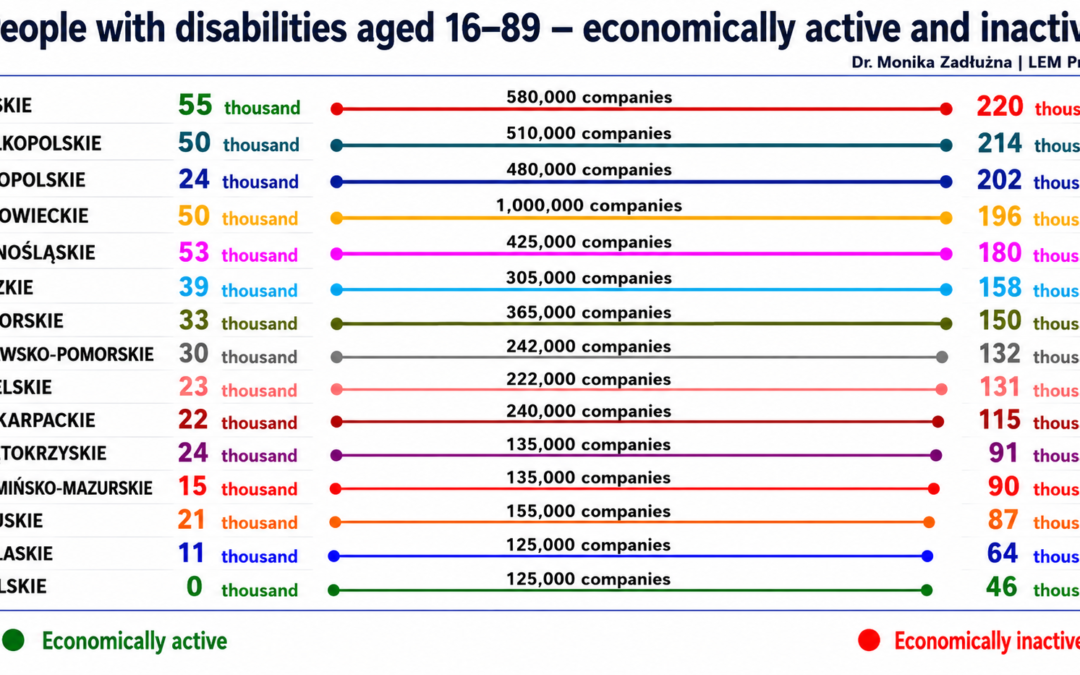
Figure 1. People with disabilities aged 16–89 – economically active and inactive
Source: Own study based on data from the Central Statistical Office, May 15, 2026.
Figure 1 shows that the largest population of economically inactive people with disabilities lives in the Silesian Voivodeship (220,000 people). The region also records the highest number of economically active people with disabilities (55,000).
I also calculated the percentage of economically active PWDs relative to the number of companies in the voivodeship. Highest share of economically active people with disabilities relative to the number of registered businesses:
- ŚWIĘTOKRZYSKIE – 0.02%
- LUBUSKIE – 0.02%
- LOWER SILESIA – 0.01% (highest in the 0.01% group)
Lowest rate of economically active people with disabilities (PWD) relative to the number of companies
- OPOLSKIE – 0.0%
- MAZOWIECKIE – 0.01%
- MAŁOPOLSKIE – 0.01%
The conclusion is therefore that the number of companies alone does not determine the accessibility of the labor market to people with disabilities.
Mazowieckie ≠ a leader in PWD activation
Mazowieckie has the largest business market in Poland, but it is not among the leaders in the professional activation of people with disabilities (PWD). Why?
The Masovian Voivodeship is home to approximately 1,000,000 companies, with Warsaw alone accounting for approximately 570,000 businesses – the highest number in the country. At the same time, the number of economically active people with disabilities is approximately 50,000, while approximately 196,000 remain economically inactive. It is estimated that up to 40% of the economically inactive people with disabilities in the Masovian Voivodeship may be under 60. This means that we are talking about a potential of up to approximately 117,000 economically inactive people with disabilities in Masovia alone. Compared to the number of businesses, this is a remarkable scale.
As we know, Masovia – and Warsaw in particular – is the executive and business center of Poland. Many of the largest domestic and foreign companies are headquartered here. It is estimated that approximately 39-43% of foreign-owned companies operating in Poland are headquartered in the Masovian Voivodeship. This raises the question: how do international companies operating in the Polish market approach employment diversity, including the employment of disabled persons?
Large companies – i.e., companies and public entities – are leaders in promoting diversity
prises are “dragging” thIn the analysis, I was surprised to learn that micro and small entere system of disabled persons’ participation in the Polish labor market. I conclude this based on the number of applications for subsidized salaries of disabled persons under the State Fund for Rehabilitation of Disabled Persons (PFRON) Incentive Effect. The largest number of applications comes from micro-enterprises, not large organizations. Data is from December 2025, but there is no significant difference from December 2024, when 33,260 applications were submitted.
Figure 2. Number of applications for subsidized salaries of disabled persons under the Incentive Effect as of December 2025.
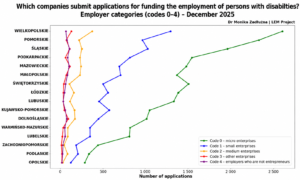
Figure 2 indicates that of the 34,053 applications submitted in 2025:
– 59% of applications came from micro-enterprises,
– 27% from small businesses,
– 7% from medium-sized enterprises,
– 3% from large enterprises.
This data does not provide information on the number of people with disabilities in Poland employed in specific legal forms of business. However, it provides insight into the situation. My next goal is to obtain information on how many PWD are actually employed in private entities, in international entities, and in public sector entities.
It is worth noting that many large Polish organizations are currently choosing an easier and faster solution – making tens or hundreds of thousands of zlotys in contributions to PFRON instead of increasing PWD employment and building greater organizational diversity. This is a quick and convenient solution, but ineffective in the long run, as it doesn’t contribute to the development of the organization’s social capital or the local and national environment.
In my opinion, Poland is still at an early stage of developing a mature culture of workplace diversity and inclusion. From my perspective, organizational and social culture play a key role in this learning process.
The public sector often talks about social responsibility, which is why it should be a role model in the employment of people with disabilities.
I believe that in such institutions, it’s worth considering creating a headhunter position for people with disabilities, whose task would be to match candidates to appropriate positions based on competencies, CV analysis, and interviews – taking into account the type of disability and the possibility of remote or hybrid work.
A country’s culture determines its employment culture?
Over 20 years of traveling across Europe, South and Central America, Africa, and Asia has allowed me to see the enormous impact culture has on the functioning of societies and the labor market. Differences are visible not only between continents but also between European countries – including Poland, Germany, France, Spain, and Portugal.
The more I traveled, the more I saw that the strength of countries and organizations is often determined not by financial capital alone, but by a culture of trust, cooperation, and an approach to others.
🔽 “Culture is the collective programming of the mind that distinguishes members of one group from another” Geert Hofstede
🔽 “Organizational culture is a set of shared, fundamental assumptions that a group has developed while learning to cope with adaptation and integration, and which are transmitted to new members as the correct way to perceive, think, and act” Edgar Schein
Organizational culture is not just a “soft” element of management. It is a mechanism that influences how decisions are made, relationships are built, human capital is managed, and intellectual capital is activated. It is culture that often determines whether diversity becomes a real value and advantage for an organization or remains merely a statement in ESG strategies and reports.
Finally, I would argue that labour market analyses which ignore the situation of people with disabilities no longer provide an accurate picture of employment in modern economies. I will explore this issue further in my next article.
dr Monika Zadłużna
- If you think this post is important, please leave a comment/share it so it reaches a wider audience. Your comment is valuable 🤝
- If you are interested in increasing diversity, hiring people with disabilities, or applying for salary subsidies under the Incentive Effect, please let me know, and I will recommend the right person.
- Write/call me if you are interested in having me conduct the training:
“Diversity as an Invisible Organizational Capital”
“Organizational Culture as the Fuel of a Modern Organization”